
🔋 Sodium-Ion Battery: How Does it Work?
The rising demand for affordable, reliable energy storage.
While lithium-ion batteries have dominated the market, growing concerns about cost, supply chains, and environmental impact are pushing industries to explore alternatives. The top alternative is the sodium-ion battery, offering a promising solution built from abundant materials.
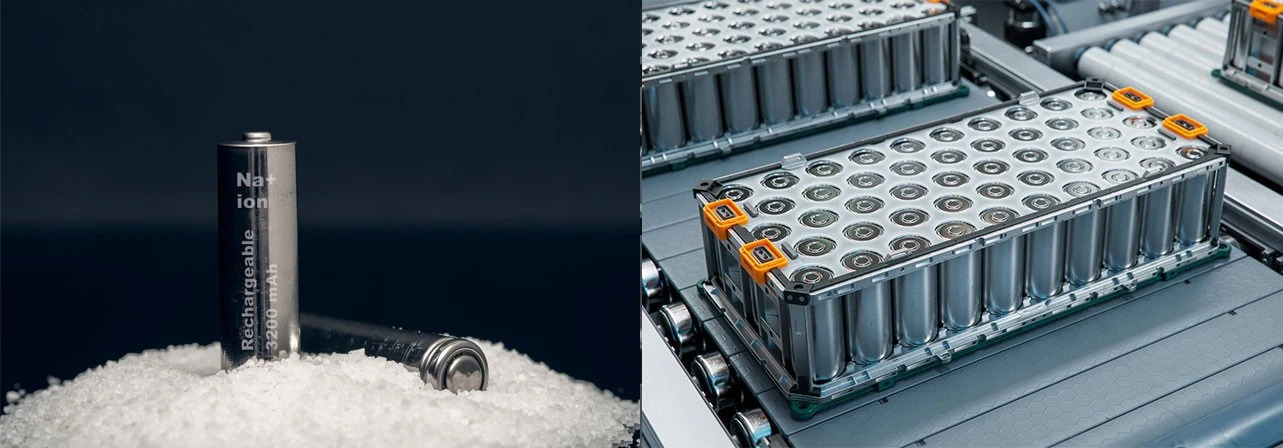
How Do They Work & Key Advantages
A sodium-ion battery stores and releases energy by moving sodium ions between two electrodes via an electrolyte. They function very similarly to lithium batteries but use cheaper, more abundant materials.
Cost-Effectiveness
Sodium is the 6th most abundant element on Earth. This exceptionally high availability helps lower material costs, making Na-ion batteries a more affordable option for manufacturers and consumers.
Environmentally Friendly
Lithium extraction often damages ecosystems and drains water resources. Sodium extraction has a much smaller environmental footprint, reducing the impact of building large battery systems.
Cold Performance
Sodium-ion batteries demonstrate stable electrochemical performance at low temperatures. Electrolyte formulations are optimized to prevent freezing, ensuring consistent ion movement even in the cold.
Safer Energy Storage
The chemical structure and relatively lower energy density contribute to a reduced risk of thermal runaway. Their material stability enhances safety for residential and industrial use.
Sodium vs. Lithium: The Data
A direct comparison of the key specifications defining today's battery technologies:
| Characteristic | Sodium Batteries (Na-Ion) | Lithium Batteries (Li-Ion) |
|---|---|---|
| Energy Density | ≈ 160 Wh/kg | ≈ 250 Wh/kg |
| Cyclability | ≈ 4000 Cycles | ≈ 2000 Cycles |
| Voltage | ≈ 3.7 V | ≈ 4.0 V |
| Efficiency | Lower | Higher |
| Safety | High | Medium |
| Critical Raw Materials? | No | Yes |
| Cost | Less costly & less volatile | More expensive & volatile |
| Size | Bulky | Light |
| Low Temp Performance | Good performance | Lower performance |
| Flammability | Non-flammable | Flammable |
Potential & Challenges 📈
Sodium-ion technology benefits from economies of scale similar to lithium, as retrofitting existing plants requires only ~10% additional expenditure.
Current Limitations
Despite the potential, significant hurdles remain before mass adoption:
Key Applications
Where will Sodium-Ion batteries make the biggest impact?
Renewable Energy Storage
In a world transitioning from fossil fuels, sodium-ion batteries make it possible to store wind and solar energy for homes and businesses, ensuring a balanced supply of green megawatts.
Grid & Telecom Support
Smart grids depend on stable power. Sodium-ion batteries offer stability to the power supply and provide critical power-on-demand for data and telecommunications infrastructure.
Mobility & Transport
While they are bulkier, sodium-ion technology is an increasingly real alternative for electric mobility and industrial transport, helping to reduce carbon emissions and maximize asset utilization.
Finding the Right Chemistry for Your Project?
Whether you need the high density of Li-Ion or the cost-efficiency of emerging technologies, STF has the expertise.
CONSULT WITH OUR BATTERY EXPERTS