🔋 Sodium-Ion Vs. Lithium-Ion: The Battery Battle
Comparing the chemistry, cost, and future of energy storage.
While lithium-ion batteries currently dominate the electric vehicle market, concerns regarding raw material shortages and costs are driving the industry to look for alternatives. Enter Sodium-Ion technology—an abundant, cost-effective rival. At Siri Technofabs (STF), we are closely monitoring this shift to provide the best solutions for Electric Vehicles (EVs) and Energy Storage Systems (ESS).
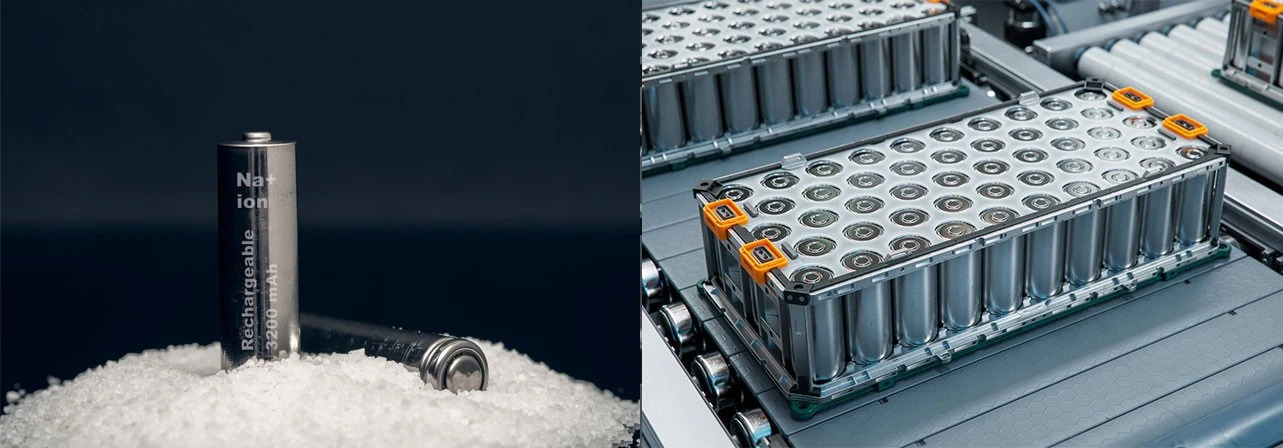
The Core Differences: Sodium vs. Lithium
Both technologies operate on similar principles—shuttling ions between cathode and anode—but the materials used create distinct advantages and disadvantages. While Lithium-Ion is the established standard for high energy density, Sodium-Ion is emerging as a sustainable alternative.
Abundance & Cost
Sodium is the 6th most common element on Earth (over 1000x more abundant than lithium). Sodium carbonate costs ~$600/ton vs. Lithium carbonate at ~$10,000/ton, offering a massive potential for cost reduction.
Energy Density
Lithium wins here. Sodium ions are larger and heavier, resulting in roughly 30% lower energy density. This makes Sodium less ideal for long-range EVs where weight is critical, but perfect for stationary storage.
Safety Profile
Sodium-ion chemistry is generally more stable and less prone to thermal runaway. Additionally, sodium batteries can be discharged to 0V for safe transport, unlike lithium batteries which require partial charge.
Sustainability
Sodium extraction is simpler and less water-intensive than lithium mining. It avoids the geopolitical supply chain risks associated with cobalt and lithium, utilizing ubiquitous raw materials.
Head-to-Head Comparison
A detailed look at the specifications defining the current battery market:
| Feature | Lithium-Ion (Li-ion) | Sodium-Ion (Na-ion) |
|---|---|---|
| Raw Materials | Rare (0.0017% of Earth's crust) | Abundant (2.6% of Earth's crust) |
| Material Cost | High ($10k - $11k / metric ton) | Low ($600 - $650 / metric ton) |
| Production Cost | ~$70 / kWh | ~$50 / kWh (Projected) |
| Energy Density | Higher (100-300 Wh/kg) | Lower (100-160 Wh/kg) |
| Cycle Life | 8,000 - 10,000 cycles (LFP) | ~5,000 cycles (Current Tech) |
| Safety | Risk of thermal runaway; flammable electrolytes | More stable chemistry; safer discharge limits |
| Best Application | Electric Vehicles (Range Priority) | Grid Storage & Low-Range Mobility |
Market Potential & Outlook 📈
While Lithium remains the king of high-performance EVs, Sodium is carving out a massive niche in stationary storage.
The Geopolitical Edge
Supply chain independence is a major driver for Sodium-Ion adoption:
Technological Deep Dive
Understanding the science and the hurdles behind the transition.
Working Principle
Sodium-ion batteries function remarkably similarly to lithium-ion batteries. Instead of intercalating lithium ions, they use sodium as the mobile charge carrier.
| Component | Lithium-Ion | Sodium-Ion |
|---|---|---|
| Anode | Graphite | Hard Carbon |
| Cathode | LiFePO4 / NMC | Layered Oxides / Polyanions |
| Collector | Copper (Anode) | Aluminum (Both Anode & Cathode) |
The Challenges
Despite the cost benefits, Sodium-Ion faces physical limitations that prevent it from being a "Lithium Killer" in all sectors.
- • Weight: The mass of sodium is 3x greater than lithium.
- • Voltage: Lower redox potential means slightly less energy per ion.
- • Maturity: Supply chains and recycling infrastructure are still in infancy compared to the established Lithium ecosystem.
Finding the Right Chemistry for Your Project?
Whether you need the high density of Li-Ion or the cost-efficiency of emerging technologies, STF has the expertise.
CONSULT WITH OUR BATTERY EXPERTS